
A chirp, squeal or visibly unsettled accessory belt can send a workshop straight to the alternator pulley. Yet the same drive includes a tensioner and one or more idlers, and their faults can sound or look similar. The useful question is not simply whether the noise comes from the belt area, but which component is failing and whether another fault is disturbing it.
An overrunning alternator pulley (OAP) contains a one-way clutch. It drives the alternator while allowing the rotor to overrun when belt speed falls, reducing the effect of alternator inertia on the accessory drive. A tensioner maintains belt tension; an idler guides the belt around its route. None can be identified as faulty from noise alone.
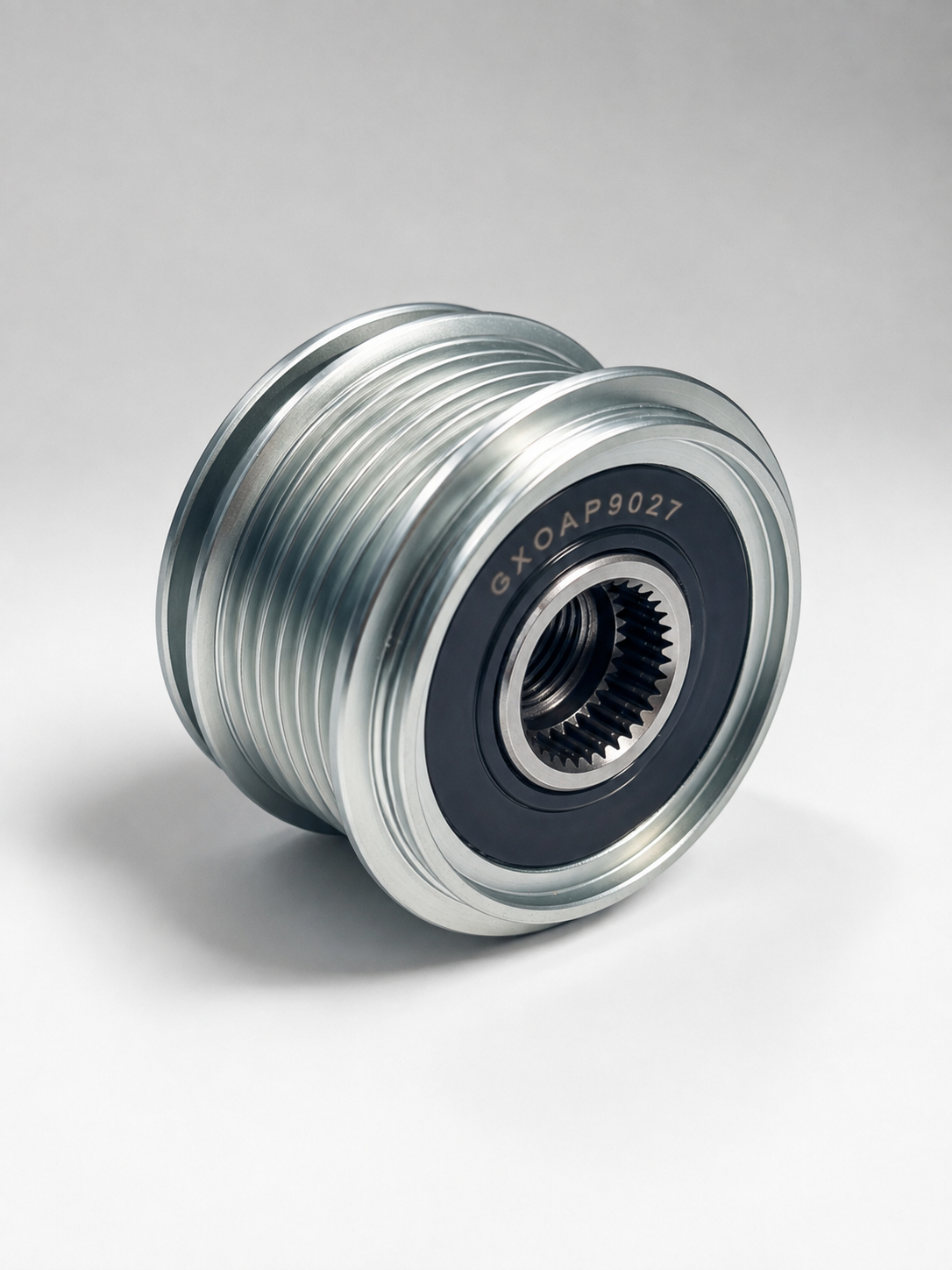
Common Symptoms of a Potential OAP Problem
Possible signs include belt flutter, excessive tensioner movement, chirping or squealing, and wear in the belt drive. Changes in engine speed or shutdown may make a noise more noticeable. These are reasons to inspect the system, not proof that the OAP is the cause. A worn tensioner, noisy idler bearing, belt damage or misalignment can produce overlapping symptoms.
OAP vs. Belt Tensioner vs. Idler Pulley
Overrunning alternator pulley
The OAP is fitted to the alternator and allows one-way freewheeling. A seized or slipping clutch can disturb belt-drive behavior, but the correct functional check depends on the pulley design and the vehicle manufacturer’s procedure. An overrunning alternator decoupler (OAD) also has a damping element; OAP and OAD are not automatically interchangeable.
Belt tensioner
An automatic tensioner applies and regulates belt tension. Its arm, spring, damper or pulley bearing can wear. A moving tensioner arm may indicate a tensioner problem, but it can also react to a fault elsewhere in the drive. Check the whole system before replacing the tensioner alone.
Idler pulley
An idler guides the belt and may increase belt contact with another pulley. It does not provide the alternator’s one-way clutch function. Bearing roughness, looseness or alignment trouble can create noise or belt-tracking symptoms that resemble other accessory-drive faults.
How to Narrow Down the Possible Cause
Start by recording when the symptom occurs and looking for belt flutter, tracking problems or abnormal tensioner motion. A qualified technician may observe a running system from a safe distance, but must never touch the belt, pulleys or other moving parts while the engine runs.
Switch the engine off and let the system cool before any hands-on inspection. Follow the vehicle manufacturer’s service instructions when checking belt condition, pulley alignment, tensioner action and accessible bearings. If belt removal or an OAP function test is needed, use the specified tools and procedure. The direction and feel of an OAP or OAD test should not be guessed from appearance.
For a fuller wear and testing overview, see GXOAP’s alternator pulley symptoms and testing guide.
What to Check Before Replacing Parts
Confirm the failed component, then inspect the rest of the accessory drive for damage that could cause a repeat complaint. Check the belt and adjacent pulleys, and confirm whether the application calls for an OAP or OAD. Do not replace an OAP simply because the tensioner moves, or replace the tensioner simply because the belt chirps.
Once the diagnosis points to a pulley replacement, match the existing OE or alternator reference and technical details before ordering. GXOAP’s OAP fitment verification guide explains the procurement checks; it is separate from diagnosing the fault.
When to Seek Professional Inspection
If the symptom persists, the belt is damaged, the route is difficult to access or the pulley type is uncertain, have a qualified repair specialist inspect the drive. Avoid operating a vehicle with a visibly failing belt drive and follow the vehicle manufacturer’s safety guidance. A symptom list cannot replace a hands-on diagnosis.
Frequently Asked Questions
Does a bouncing tensioner prove the OAP has failed?
No. It shows that the belt drive needs inspection. The tensioner itself, the OAP and other drive components can all contribute to abnormal motion.
Can an idler pulley sound like an alternator pulley?
Yes. Noise from an idler bearing can be difficult to locate by ear in a running accessory drive. Inspect components safely with the engine off using the applicable service procedure.
Is an OAD the same replacement as an OAP?
No. An OAD includes a damping function in addition to overrunning behavior. Confirm the specified pulley design and reference before ordering a replacement.
Should the OAP and tensioner always be replaced together?
Not on symptoms alone. Inspect both, along with the belt and idlers, then replace worn or damaged parts according to the vehicle and component manufacturer’s guidance.
From Diagnosis to the Right Replacement
A reliable repair starts with identifying the cause across the whole accessory drive. After the OAP type and fitment are confirmed, buyers can review GXOAP’s product catalog and contact GXOAP with their reference and application information to discuss suitable products and supply requirements.
Technical References
For component functions and inspection context, see Continental’s OAP technical overview and Gates’ tensioner diagnosis bulletin.