A Similar Appearance Does Not Guarantee the Right Fit
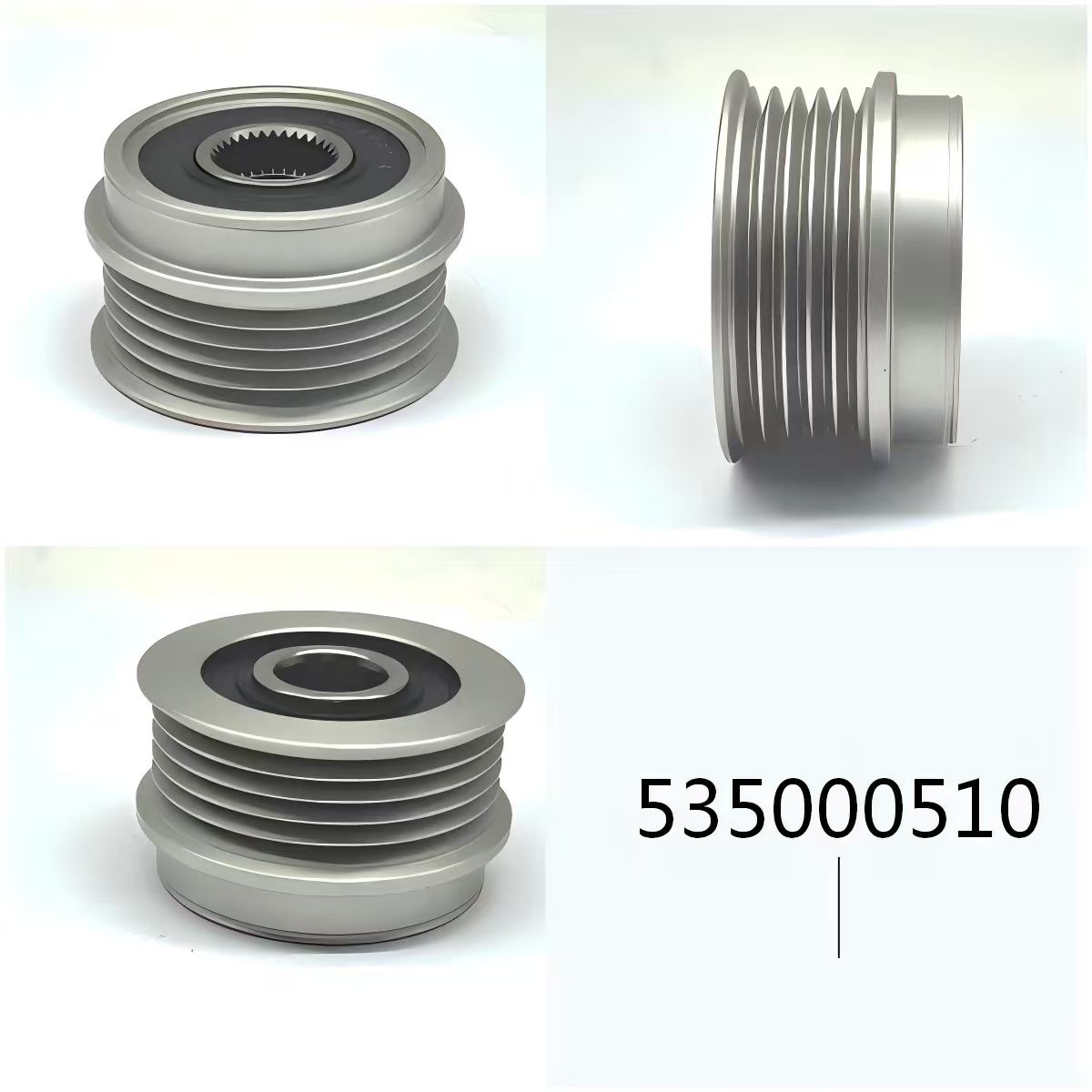
When sourcing overrunning alternator pulleys (OAPs), a part may look similar to an existing component without necessarily being the correct replacement.
For automotive parts importers, distributors, wholesalers and brand owners, an incorrect fitment decision can lead to additional verification work, unnecessary sample exchanges and avoidable purchasing risks.
Before confirming an order, it is worth checking the available reference information, the alternator application and the relevant technical requirements.
This guide outlines five practical steps to help buyers organize that process.
Five Fitment Checks Before Ordering
1. Start with the OE Reference
An OE reference number is a useful starting point when identifying an overrunning alternator pulley.
However, a reference number should be checked against reliable application information rather than treated as automatic proof of compatibility.
Before requesting a quotation, buyers should:
- Record the OE reference provided for the target part.
- Check that the reference belongs to the intended component.
- Verify any proposed cross-reference against reliable supporting information.
- Flag missing, conflicting or uncertain reference details before proceeding.
If multiple reference numbers are available, provide them to your supplier together with their source or context. This makes it easier to identify what still needs to be confirmed.
2. Confirm the Alternator Application
The application details can help clarify whether a proposed replacement is appropriate.
Depending on the project, useful information may include the alternator manufacturer, alternator part number and other available application references.
Vehicle make and model information may also help, but it should not replace component-level verification when the available data is incomplete.
For distributors managing multiple product lines, keeping these details organized can make future sourcing and cross-reference checks more consistent.
3. Review the Technical Drawing and Dimensions
When reference information alone does not resolve a fitment question, a technical drawing or dimensional record can provide additional evidence.
Depending on the component and the information available, the review may include:
- Overall dimensions and relevant mounting interfaces.
- Thread or shaft-related specifications, where applicable.
- Other drawing-defined dimensions and tolerances.
- Differences between the proposed replacement and the reference component.
The dimensions to check should come from the applicable drawing or verified product specification. Buyers should not assume that two pulleys are interchangeable simply because their external appearance is similar.
If the drawing is unavailable, tell your supplier which details are known and which remain uncertain.
4. Decide Whether Sample Verification Is Needed
Some projects can move forward after the available references and technical information have been adequately checked. Others may require additional verification.
A sample review may be worth considering when:
- A new replacement reference is being introduced.
- Available reference information is incomplete or inconsistent.
- A drawing does not resolve a critical fitment question.
- The buyer needs to evaluate a component before approving a new product range.
Before arranging a sample, agree on what needs to be checked, what information must accompany it and what evidence is required for approval.
A sample should not be treated as proof of every aspect of product performance. The verification method should match the project’s actual requirements.
5. Prepare the Right Information Before Requesting a Quotation
A well-prepared inquiry helps both the buyer and supplier understand the requirement before discussing the next step.
Use this checklist when contacting an OAP supplier.
| Information | Why it helps |
|---|---|
| OE reference | Provides an initial identification reference |
| Alternator reference | Helps clarify the intended component application |
| Technical drawing, if available | Supports dimensional and interface review |
| Existing sample or clear product photos | Provides additional reference material |
| Target application | Adds context to the replacement requirement |
| Sample or order requirements | Clarifies what needs to happen next |
Not every project will have all these details available. If some information is missing, state that clearly rather than filling the gaps with assumptions.
The supplier can then review the available information and identify what else may be needed before fitment is confirmed.
Why Fitment Verification Matters to Aftermarket Buyers
For importers, distributors and automotive parts brands, fitment verification is part of managing sourcing risk.
A clear verification process can help reduce avoidable identification errors, make technical communication more efficient and establish a more reliable basis for product approval.
It also gives both parties a clearer understanding of the difference between a preliminary reference match and a confirmed replacement application.
The goal is not to make every inquiry unnecessarily complicated. It is to identify the information needed for a sound decision before committing to a product.
Work with an OAP Supplier on Your Next Project
At GXOAP, we focus on overrunning alternator pulleys for automotive aftermarket and OEM-related supply requirements.
If you are evaluating an OAP replacement or developing a product range, you can share the available OE reference, alternator reference, technical drawing or sample details with our team.
We can review the information provided and discuss the next verification step based on your project requirements.
Before confirming your next OAP order, make sure the reference, application and technical information support the fitment decision.
Contact GXOAP to discuss your OAP sourcing requirements.